







 Egypt is on track. Today it is where it should have been on February 11, 2011, if the revolution had not gotten “stolen.” Though the cliché doesn’t mean much, it explains the derailment that followed January 25. The revolution suffered a catastrophic glitch that lasted for over 28 months. However, Egypt is headed towards a better tomorrow; where it should have headed after Jan25.
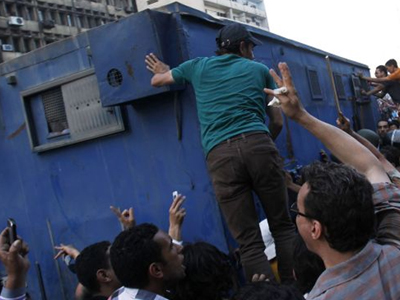
The number of participants on the streets on June 30th exceeded expectations. Egyptians then proved to Morsi and his clan, to the Egyptian army, and to the world, yet again, that they are a people to be reckoned with.
And the army complied. For over a year, it had watched silently avoiding confronting the inept president or resorting to politicizing its powers, but June 30th was the ultimatum, and the army ousted the Ikhwani president.
What followed is taking Egypt where it should have been after January 25. First, the ex-president, an Ikhwani by default, is being detained. True his charges have yet to be announced, but his shaded flee from Wadi el Natroun Prison during the Jan25 Revolution and the reasons behind his arrest in the first place are good enough to keep him captive, at least until the streets in Cairo quiet down. The incitement that the Ikhwani leaders are spewing around Cairo is a valid reason to keep their leader in a safe and sound place.
Second, the army remains distant from the political arena. It did what Egyptians wanted it to do but kept its promise not to get involved in the governing of the country, a vast difference from Tantawi’s take over after January 25 and Nasser’s military coup of 1952. Now the army has diverted its attention to protecting the country and focusing on terrorists trying their best to spread mayhem in Sinai.
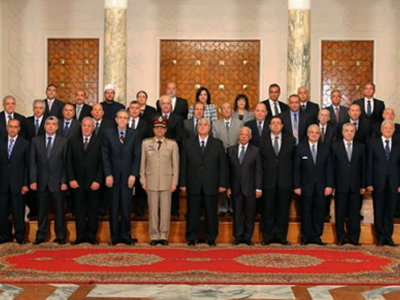
More importantly, the country seems to be in strong, reliable hands. The interim president is quiet and soft-spoken but surrounded by technocratic professionals and advisors, all capable and with extensive experiences in their own fields. Again, finally Egyptians have a government empowered by expertise not chosen for its allegiance to the Muslim Brotherhood.
The Information Minister, whose derogatory remarks to several female media personalities fuelled the anger of all Egyptians, is gone and is replaced by Doria Sharaf el Din, a woman of a long outstanding career in the broadcasting field.
The Culture Minister whose first ministerial act was to fire the head of the Egyptian Opera House and who has had hundreds of renowned Egyptian artists camp in front of his newly acquired office for weeks, has been replaced. The woman whom he fired was offered his post but ended returning to her original post of Head of the Opera House. Inas Abdel Daim, a flutist, had previously served as Director of the Cairo Symphony Orchestra, Dean of the Conservatoire, and Vice President of the Academy of Arts. http://bit.ly/17ibscF
Prime Minister Hisham Qandil has been replaced by Biblawi, a pro in the field of economy. Add to Biblawi the wealth of experience available in Galal, the new Minister of Economy, and you realize that this government will be confronting the economy issue head on. The economy is clearly one of its priorities.
On the international front, El Baradie, the activists’ choice from day one and the Nobel Peace Prize winner, 2005; and Nabil Fahmy, a career diplomat, Egypt’s ambassador to the US and Japan, and the founding Dean of the School of Public Affairs at the American University in Cairo; http://bit.ly/1alUL1L, together form a powerful international front. Again this particular portfolio is in safe hands.
Then, surprisingly, power and gas shortages are over. Did they exist because of the ineptness of those in charge and their inability to handle challenges, or because those same leaders wanted Egypt to remain at an impasse, or because Egyptians did not want the Ikhwani government to succeed? Maybe it is a combination of all these reasons.
But more importantly, demonstrations for better pay and benefits have been placed on the back burner. Union workers, professionals, and other trades people await change patiently. They are satisfied and content by where Egypt is today and are giving the new government a chance to effect change.
And the best change lies in how Egyptians have finally accepted the police force and the army as key players in the new Egypt. Only by giving these two forces their respectable place in society can they function with dignity and strength.
Still, Egypt is still not safe. Copts are being terrorized in their homes. http://bit.ly/12DapQ3 Morsi’s avid followers are still in Rabaa Square and elsewhere hoping to restore their president to power. The fossilized challenges whether economical, educational, or infrastructure related, will take years to be tackled. But Egyptians are willing to await change, to watch the upheaval created by the Ikhwan from afar and not get involved, and to expect a better tomorrow.
All what Egyptians want now is for Egypt to remain along this path. It is finally in safe and experienced hands. Tomorrow looks brighter and better.