






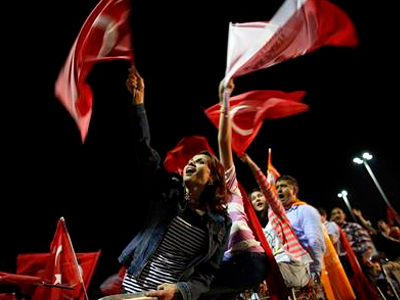
 It’s been ten days since the protests in Taksim Square and Gezi Park, Turkey, broke out. Turks in over 60 cities have been voicing their dissatisfaction, and every day thousands more join the anti-government protests. Now that the police force pulled out of the square, a lively atmosphere with songs and drumming vibrates through it. Hence, the tents have been pitched and the grounds have become occupied—a scene reminiscent of Tahrir Square and Zuccotti Park. I wonder how this particular event will unfold; will it fizzle out as Zuccotti Park did or will it backfire as the Tahrir one has?
It all started with the cutting down of trees in Gezi Park to give way to the building of a mall. Furious Turks stood their ground calling, first, for the protection of the precious, old trees, then for putting an end to the mall project, and finally for change. It’s being called “…the worst civil unrest of his [Erdogan’s] decade-long rule.” http://aje.me/116xN95
The police force, backed by armed vehicles and helicopters, reacted aggressively, as police force does everywhere, using tear gas and water cannons injuring thousands and killing three.
Turkey, similar to Egypt, has its own “Ultras” groups forming as we speak. In a rare show of unity, “fans from Istanbul’s three main football clubs Besiktas, Galatasaray and Fenerbahce, who have been heavily involved in some of the protests, plan simultaneous marches on Taksim later on Saturday [June 8].” http://reut.rs/18Utwe9. But most importantly, Erdogan, the Prime Minister, has become the perpetrator. Turks are seeing the worst in their prime minister and his governance.
The similarity between the eruption of Egypt’s Jan 25 revolution and the call for change in Turkey is obvious. The Economist starts its article on June 8th citing the unrest, “Broken heads, tear gas, water-cannon: it must be Cairo…” http://econ.st/11nm4mr
Facing a similar upheaval to the one that Egypt faced 30 months ago, Turkey is now at the brink of change. Will the change be for the better or the worse?
In many ways, Prime Minister Erdogan had done well:
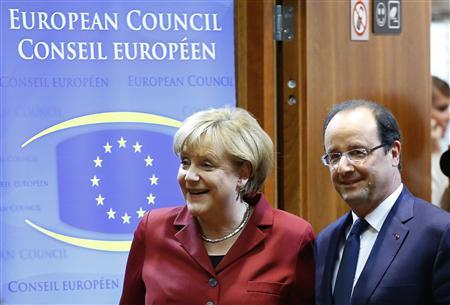
GDP growth has averaged over 5% a year since his Justice and Development (AK) party took office in late 2002. The government also pushed through enough reforms to earn the start of membership talks with the European Union in 2005, a prize that had eluded Turkey for 40 years. Mr Erdogan has done more than any of his predecessors to settle matters with his country’s 15m repressed and restless Kurds. Turkey has come to be seen as a model for nations emerging from the Arab spring. http://econ.st/11nm4mr
Turkey has also been hailed as the model country to visit in the Middle East—safe, clean, warm, and inviting. Egyptians opt to go there regularly, and they come back disappointed that Egypt does not fulfill the same level of expectations for tourists while it has a similar geographical vista, but more to offer in terms of antiquities, monuments, and history. Egypt also did not reach Turkey’s management and organization level. They came back to say that Khan el Khalili, Egypt’s renowned bazaar couldn’t compete with the souks of Istanbul, that the beaches were by far more allowing and less intimidating, and the whole country was more inviting and less chaotic.
Sure Turkey doesn’t have the best democratic system. Sure Erdogan seems as though he favours his followers and rules with an iron fist. But the Turks, government and people, must heed a similar setback to the one Egypt has undergone.
Egypt’s revolution started small but soon grew in demands. The protestors had every right to revolt and ask for change as the Turks are doing now. However, Egyptians threw the baby out with the bath water; now they are left with a single-minded, sidetracked, and inept regime.
Egyptians asked for change and they got it. They thought the change they wanted was for the better; it turned out to be for the worse. Disappointed, Egyptians reminisce about the “good old days” of Mubarak. It’s been only 30 months since the revolution and signs of regret fill the air. Definitely, Mubarak was better than the Ikhwan; definitely Mubarak, though he left much to be desired, did much for Egypt. With a few changes, Mubarak would have been the better option.
This Turkey should heed. Change is necessary; improvements for and satisfaction of Turkish citizens must be a set ultimatum. However, asking for complete removal of a system or the total upheaval of a stable country may not be the way to go.
As it stands, Turkey is not perfect, but it can teach many countries in the Arab World lots. Turks, regime and people, beware.