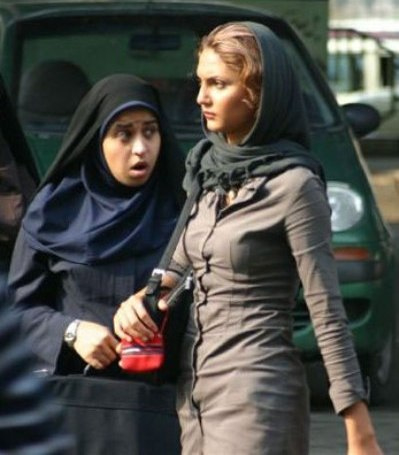
I am going to use two major powers- and then branch out- in the Middle East right now to make the point about the usage or politicization of religious identities; The State of Israel and the Islamic Republic of Iran. I agree with the title or the name of Israel and I do not agree with the name of Iran.
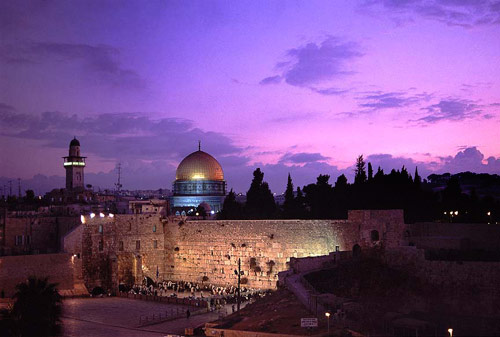
Jerusalem holy place
I do not agree with countries adding or formally attaching a religion or nationality to their names. Now, Israel can explain or decide that it is a Jewish state and Iran if it changes its name can decide that it is an Islamic country- as long as it is not in the name itself and as long as the countries that add an identity to its name respect civil liberties.
In Israel, you can be anything and still live your life normally; you can have a mosque, a church and a synagogue. In Iran it is not the same, women have to cover their hair, have to abide by certain restrictions and the country imposes its description or it’s version of religion on its citizens regardless of their religious or faith affiliations, Israel does not.
From that introduction, we branch out to political/religious groups in the Middle East, The Muslim Brotherhood organization that has branches in almost every country in the Middle East including the State of Israel among the Israeli Arabs and in the West Bank and Gaza.
The official number of its members if it exists does not mean much to show the real strength of the group. The strength of the Brotherhood stems from many factors, mainly that it has been banned and chased and this made them look mysterious and made ordinary people intrigued by the fact that governments keep cracking down on them.
Based on media and public pulse reports, the group could win the parliamentary elections not only in Egypt but also in Jordan, Syria, and other Arab countries if it is conducted completely freely.
In Egypt the Brotherhood rules now, the president is from them, has just passed a new constitution, and soon a parliament and a new government. But The Muslim Brotherhood and other religion based political parties participated in elections and won, did not win based on old rhetoric and slogans for certain actions in and outside their respective countries but won because they were pragmatic, worked with international organizations, still the example is Egypt, and clearly respected Egypt’s international commitments including but not limited to the peace drive and process and treaties with the State of Israel in the Middle East and the support within that understanding and relations with Israel to help to establish a viable state for the Palestinians in the West Bank and Gaza.
I do not expect countries and cultures in the Middle East to have theological states although we have been seeing and witnessing strict or even individual fanatic interpretation of the three divine religions, Judaism, Christianity and Islam across the world – Iran and Saudi arabia are really not theological states, they are political pragmatic regimes that use religion each for their own convenience and purposes but they are not disconnected from the outside world and ban everything that their fanatics ask them to ban like Banks, modern communications, world affairs and more.
People in the Middle East and until their start to rise and the start of their own democratic spring; have been suffering from mental, spiritual vacuums, frustrations, disillusionment and financial distress. They have been looking for answers, and resorting to purity, spirituality that is found according to the minds of most humans in the holy books or faiths, in the beliefs. The different sects and interpretations within each faith still tear people apart. Religions eventually and as in democratic societies are personal, private, and eventually people by large will see them as the way they want, cherish them, but to oneself and do not impose them on others. Go to your synagogue, to your church, to your mosque, to your temple, if you want, but again do not force them. Mine is not better than yours and vice versa, should be the mantra.
In Europe, there are political parties with a religious identity adjacent to its names, such as the Christian Democratic Party in Italy and Germany, but Italy and Germany are just Italy and Germany, not theological state. The parties there though cherish the principles, do not impose them to change the state into a theological state.
In the United States, we do not have parties with a religion name in particular but we have groups, such as the life groups that do not believe in abortion besides those who do not mind it. Fighting democratically for what you believe is fine, arguing, debating, deliberating, all are good as long as we stick to dialogues and not violence.
Free societies usually do not strict political or religious parties from existence; you can have for example, a Jewish Brotherhood, or Christian Brotherhood or as in the Middle East right now and for generations the Muslim Brotherhood. I want to go further and say why not having all these organizations in the Middle East if someone or groups are interested.
This is the point I want to make, if you allow a Muslim Brotherhood in the Middle East, then you cannot ban a Christian or Jewish Brotherhoods in the same place. The followers of the three religions exist and they have or should have the same rights. I really do not see a problem in naming a political party with a religion as long as this party respects the civil liberties and the civic and liberal societies that in my opinion the Middle East should be based on.
The New Middle East will include both Israel and Palestine in the West Bank and Gaza and will be based on civil liberties. Societies will evolve from using religions to attract or search for identity to have strong political processes based on the needs of the people and the changing times. Finally yet importantly, religions will always have tremendous force over its followers especially in a place like the Middle East, the birthplace of the three divine religions, but tolerance-probably- will at the end prevail once all realize that they have no choice but to live next to each other and with each other.
Picture Courtesy of http://www.friendlyplanet.com