







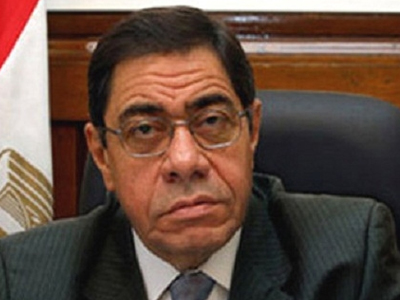
 The Supreme Judicial Council announced the reinstatement of Abdel-Maguid Mahmoud to his ex-position as Prosecutor General. By virtue of this verdict, current Prosecutor General Talaat Mostafa’s assignment becomes injudicious. However, President Morsi’s advisors argue that the court’s verdict that overturned Prosecutor General Talaat Abdullah “is not enforceable.” http://bit.ly/11cBjRG
The courts have demanded that Abdullah be dismissed on the grounds that he was appointed by the president not the Supreme Judicial Council, as dictated by Egypt’s legal system. They have also advised Mahmoud to return to the judges’ benches and resume his earlier post as a judge. If Mahmoud would just do that, Egyptians would breathe in a big sigh of relief, but disappointingly, he isn’t budging.
Firstly, Mahmoud would be saving President Morsi’s face since the president wouldn’t be the one going back on his words yet again. Two, he would be giving the judiciary system in Egypt its rightful and deserved dignity, which has, since Morsi and his advisors refuse to comply with the ruling, been trampled upon.
On another level, if the president does not follow the law, the message he is sending out is clear and simple: the law and the judiciary system are not to be followed or respected. And this resolution by the regime is detrimental to Egypt. It personifies the chaos, the fawda, that exists today in Egypt. A country whose officials don’t respect the law is a lost country.
The president’s resolution, not to comply with the court’s ruling, paves the way to more violence, attacks, riots, and protests. It also encourages people to take the law into their hands.
Still, it seems as though the only remaining power in Egypt’s powers is the judiciary system. The army, since it stepped down after President Morsi took over, has stood and watched the mayhem and did absolutely nothing. It views and does not comment. It realizes that Egyptians are asking for its involvement and does not respond. Whether or not it will ever take matters into its own hands and pull Egypt out of its misery is not very clear.
The police force has a minister in alignment with the president, as he should be in all ordinary situations. He does what he is told and complies. In many of the recent clashes, the police force watched and did nothing; sometimes it clamped on victims, other times it seemed to attack the victimized.
Only a few days back, the Coptic Cathedral, an Egyptian treasure, was attacked as Coptic mourners prayed for their Khosos dead and headed out of the Cathedral to bury them. And the Minister of Interior did show up at the Cathedral, but many hours later.
Had he shown up earlier, had his forces made some attempt to defend the mourners and their fallen sons, Egyptians may have looked up to him. Quite the contrary, the announcer at the scene referred to the minister’s “procession” arriving at the Cathedral and claimed that the gunshots and attacks subsided only then, implicating the police force even further.
Not only the Minister of Interior but also the government, the army, the Upper House, the governors, and all those in power swear allegiance to Morsi, so we shouldn’t be expecting much from any of them.
The media remain strong and relentless gaining momentum and boldness. Never has an Egyptian leader been humiliated or degraded as much as President Morsi has been. The thought that someone could’ve insinuated, only insinuated, an insult at Nasser is ludicrous.
The media are a voice to be reckoned with but are unable to force the president into action. All what the media can hope for is that people would listen and watch, and then turn the tables, but the media itself can’t perform miracles.
And the opposition remains critical but ineffective.
So what stands against Morsi today? Which power remains unscathed and ready to defend the rights of Egyptians? It is the judiciary system. The judiciary system in Egypt has gained strength, continues to challenge the leadership, and has shown exemplary standards and dedication to justice.
The high courts of Egypt disbanded the Parliament in 2012, then rejected Morsi’s decree to reinstate it, suspended the parliamentary elections of 2013, and reversed the appointment of the Prosecutor General.
Yes, several outspoken judges, such as Tahani El-Gebali and others, have been shunned and set aside, but the Supreme Constitution Court remains superior, above everyone, including the president. It does seem as though it is the only power standing against the Islamic torrent today.
How will the Prosecutor-General conflict be resolved? Who will win this round? Personally I don’t care who wins as long as Egypt emerges as the winner at the end.